
Sam Rockwell vs. The Algorithm
Review of A Film That Requires a Fully Charged Attention Span

I’ve been in education long enough to remember when “social networking” meant whispering during class and passing notes folded into complicated origami shapes that required a graduate degree in geometry to open. Back then, if a kid wanted to ignore another kid, they had to do it manually, with eye-contact avoidance and strategic backpack placement. Today, of course, social avoidance comes with a glowing screen and a lithium battery.
As a school administrator who worked in the system before mobile devices colonized childhood, I’ve watched the change happen in real time. Lunch tables used to be noisy ecosystems. Now they look like airport charging stations with puberty. And it’s not just kids. The adults have surrendered too.
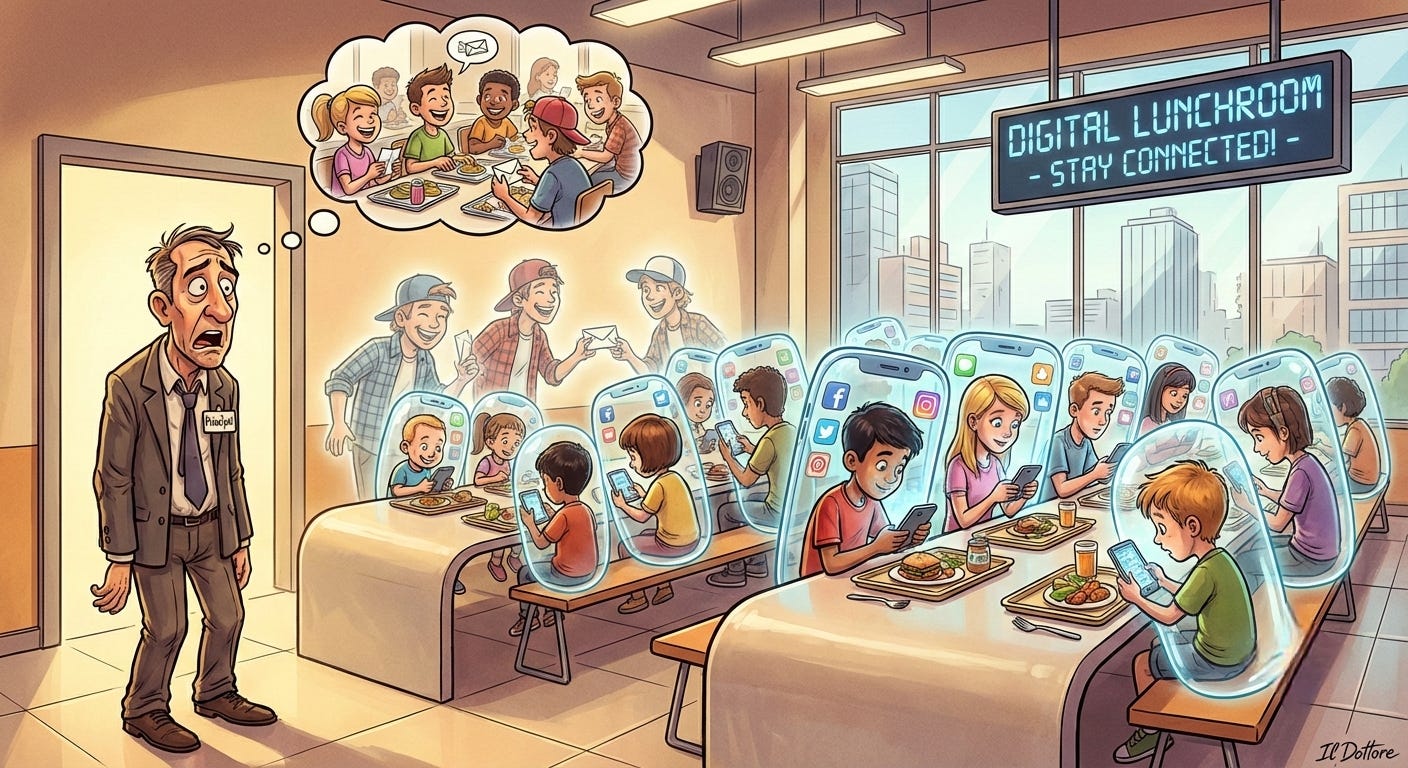
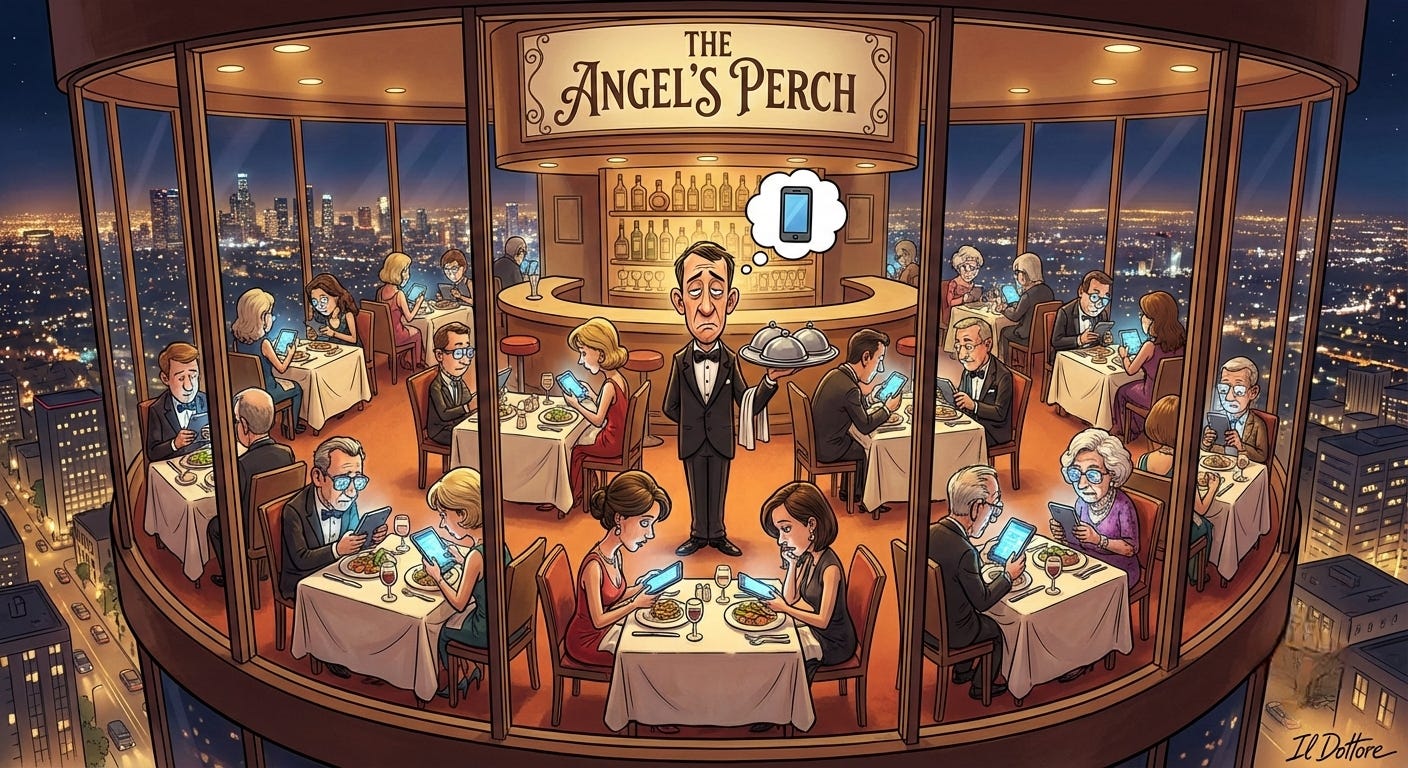
On Valentine’s Day I took my wife to a very fancy restaurant at the Bonaventure Hotel in downtown Los Angeles — the one with the magnificent rotating view that slowly reveals the city like a cinematic establishing shot. It’s not cheap. The place practically charges admission for oxygen. And yet what did I see? Couples, families, entire tables of people sitting silently, waiting for food, staring into their phones like medieval mystics consulting illuminated manuscripts. The skyline revolved majestically outside the window while inside everyone scrolled past it.
Which is why Good Luck, Have Fun, Don’t Die hit me like a well-aimed philosophical brick. The plot unfolds like someone spilled a perfectly good science-fiction movie across three different timelines and then tried to mop it back together with philosophy. Sam Rockwell plays a very normal-seeming guy who gradually discovers that time is less of a straight road and more of a municipal parking structure — you keep circling past the same events but on slightly different levels, never entirely sure where the exit is. People appear who seem to know things they shouldn’t know, conversations make sense twenty minutes later, and reality itself behaves like it’s buffering. Somewhere in the middle of all this are big questions about fate, technology, memory, and whether the universe is gently guiding us or just messing with us for entertainment value. By the end you realize the movie wasn’t confusing by accident — it was trying to simulate what it feels like to be human in the 21st century: half in the present, half in the cloud, and slightly unsure which version of yourself logged in first.
This is a movie about connection and disconnection, memory and time, and the strange way we live simultaneously in the present and in a thousand digital ghosts of the past. It’s exactly the sort of movie that requires you to actually pay attention — which in 2026 practically qualifies as an extreme sport.
And then there’s Sam Rockwell.
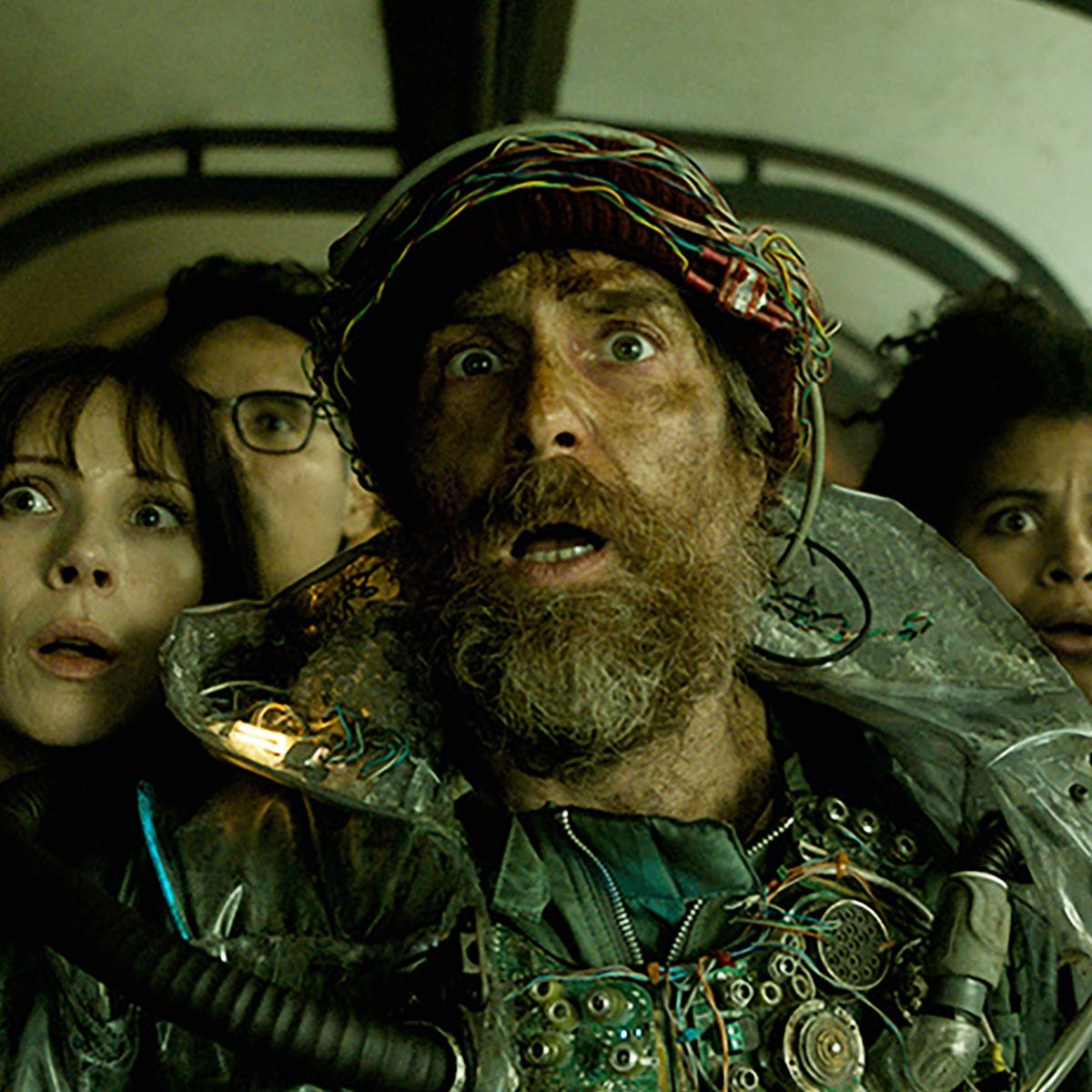
I’ve always liked Sam Rockwell without ever bothering to learn anything about Sam Rockwell. I couldn’t tell you where he was born, what he eats for breakfast, or whether he owns a rescue dachshund. But I’ve trusted him on screen for decades. He has that rare actor energy that says: I am here to act. Not to pose. Not to maintain a brand. Not to launch a fragrance line. Just to act.
In this film he’s terrific — loose but precise, funny but grounded, like a jazz musician who knows exactly when to miss a note on purpose. He carries the movie through its emotional pivots and temporal gymnastics with a kind of lived-in authenticity that makes even the strangest narrative turns feel human.
Because make no mistake: this movie does not unfold in a straight line.
The story jumps back and forth through timelines with the confidence of a Labrador retriever chasing multiple tennis balls. At times you will wonder whether you accidentally sat down in the wrong theater and wandered into the middle of the film. Characters appear, reappear, and recontextualize themselves. Scenes echo other scenes. Information arrives late to conversations that already happened.
It’s disorienting — deliberately so.
And that disorientation has a side effect every moviegoer knows: it makes the film feel longer than it is. Your internal clock starts doing narrative algebra. “Wait, if this happened before that, and that happened after the other thing, how long have I actually been here?”
And yes, by contemporary standards, it’s a long movie. Modern audiences have the attention span of caffeinated squirrels, and this film politely refuses to sprint.
But that’s also one of its virtues.
It insists on patience. It insists on presence. It insists on the very thing our devices are steadily eroding: sustained attention.
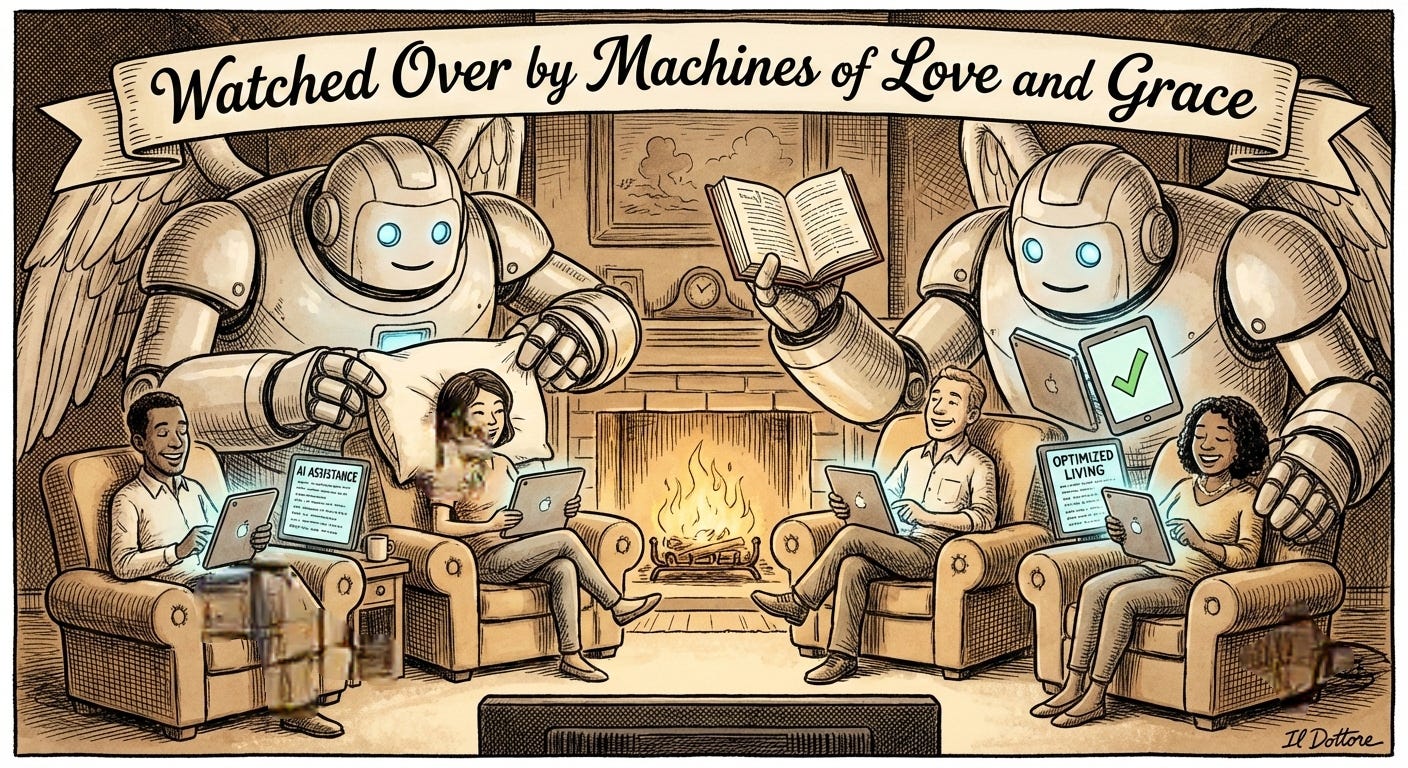
And beneath all of that is a layer of social commentary that sneaks up on you. The film quietly explores how machines are not just tools anymore but environments — places we live inside mentally and emotionally. The characters drift between physical and virtual spaces with a casualness that feels uncomfortably familiar. Reality starts to look less like a fixed location and more like a temporary login.
What makes the movie feel especially timely is its suggestion that the machine isn’t just something we built — it’s something that is steadily building us. Our habits, our expectations, our sense of time and identity are being reshaped by invisible systems humming in the background. We think we’re using the technology, but the technology is very clearly using us back.
With large language models now out in the wild, the film feels less like speculation and more like reportage. The moment where we might have decided whether to invite machines into our inner lives has already passed. The gates are open. The algorithms are writing, speaking, advising, remembering. The machines are not coming — they’re here, quietly finishing our sentences.
Watching Good Luck, Have Fun, Don’t Die felt like exercising a mental muscle I hadn’t used in a while — the ability to sit with a story long enough for it to bloom. By the end, the nonlinear structure resolves into something unexpectedly elegant, like realizing that what looked like chaos was actually choreography.
The film is funny in a dry, human way. It’s thoughtful without becoming pretentious. It’s emotional without begging for tears. And beneath all the timeline acrobatics is a simple, resonant idea about how fragile our lives are and how strange it is that we spend so much of them somewhere else — mentally, digitally, temporally — instead of right here.
It’s the rare movie that makes you want to put your phone away not because someone told you to, but because you suddenly realize you might be missing the point.
Highly recommended.
Just don’t try to watch it while checking notifications. The movie will survive, but you won’t understand a thing — and Sam Rockwell deserves better than being paused mid-sentence while you investigate a text about somebody’s dog.